The Room Is Ready. The City Writes the Rest.
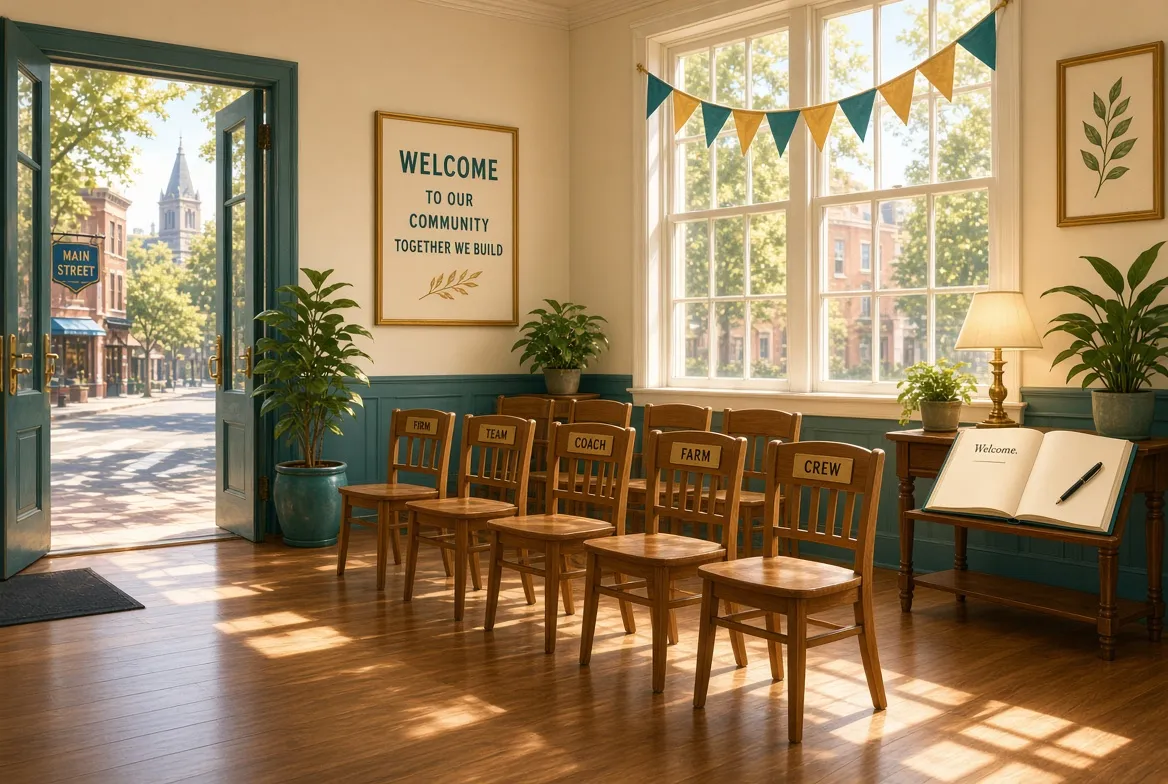
A digital city hub can be built with care and still be only a room. Shape arrives when people claim the chairs.
Written by
FinTechful Editorial
Editorial Staff
FinTechful perspectives on financial opportunity, healthy mind & body, farming, local food, and the homes and communities we care for.
View more editorial insightsTaxonomy
Key Takeaways
- Infrastructure is not the ecosystem. It is the room the ecosystem uses.
- More than a year of planning and building gets you a door that works. It does not write the city.
- Demo listings teach the shape of a page. They are not the heartbeat.
- A city book becomes true when a professional, a firm, a farm, or a neighbor puts a real name on it.
- Founding 50 is the first handwriting in the register, not a badge rack.
- FinTechful can keep the book open. The city still has to walk in — and the work, in that sense, is only beginning.
More than a year of planning and development sits under these hubs. Routes that do not swallow a homepage. A sitemap that tells the truth. A sentence under a rule. A 404 that sounds like a person. Addresses for firms, teams, stalls, coaches. Twenty-five doors that open on a city name.
That is a room, finished with care.
It is not yet a local economy. A local economy has a voice that will pick up. It has a plumber who owns the Tuesday, a planner who knows this vesting calendar, a baker whose midweek order is already a habit. Until those people walk in, the chairs are still labeled by example.
There is no embarrassment in that. You do not open a hall by pretending the concert has already happened. You open it by making the door honest: here is the page, here is the seat, here is how a name becomes a record someone would send a neighbor.
The demos are the floor plan. They show where a listing lives, where a roster hangs, where a firm sits beside a team. They should not be asked to impersonate the city. Heart and soul do not come from eleven repeated faces. They come from the first professional who treats the slot as theirs.
What “ready” actually means
A claim will stick. A Founding 50 seat can take a real number. A neighbor can land on Chicago and find a door that is Chicago’s, even if the rooms upstairs are still being furnished. Readiness is not density. Readiness is that the page will not rot the week after someone signs it.
What it is not
A finished market. A promise that search already loves the subdomain. A directory so thick that the first yes has twenty companions. Those follow people, not scaffolding.
A year and more can tune the machine. It cannot appoint the city. That part is engagement: a firm that puts its logo on the card, a coach who writes a sentence only this workforce would recognize, a vendor who treats Tuesday as part of the stall.
The room is ready. The ecosystem begins when someone with work to do walks in and signs the book. In that sense the work is still just beginning.
Related Articles
The Platform Is Finished. Being Found Is the Slow Part.
A free citation page can be search-ready and still invisible. Discovery on this internet is slow — until it isn’t.
The Midweek Order Is the Real Farm Business
Saturday proves people want you. Tuesday is whether the city can still buy.
The First Wave of Yeses Is How the Loop Starts
One claimed page is a start. Several, given with permission, are enough for work to move from person to person — instead of to whoever paid the most for the slot.